Mind

Your Brain Has a Password — And It's Not Exercise

The five psychological habits that research shows protect your cognitive health as you age — the ones most doctors never talk about

Peaceful mind

Your doctor shared this because protecting your cognitive health requires more than physical habits — the psychological side of aging is just as important, and just as actionable.

What you'll learn:

  • Why apathy — not just genetics — doubles your risk of dementia
  • What an 80-year Harvard study found to be the #1 predictor of mental health
  • Five specific, science-backed habits you can start building this week
Mind

You've Been Protecting the Wrong Thing

Before you begin
Trouble reading? Press Cmd + (Mac) or Ctrl + (Windows) to enlarge this text. On mobile, carefully pinch-to-zoom.
Prefer to listen? Use your device's native "Spoken Content" or "Select to Speak" accessibility settings to have this module read aloud to you while you rest your eyes.

You already know you should exercise, sleep well, and eat right. Those protect your brain — the biological hardware. But research is revealing something we've largely ignored: aging is also a psychological process, and the mind needs its own kind of protection.


Think of it this way: exercise and diet maintain the engine of your car. But without a destination and a reason to drive, even the best-maintained car just sits in the garage with the engine slowly winding down. That's what happens when we neglect purpose, connection, and curiosity as we age.

Cognitive Health Psychological Resilience Dementia Prevention Healthy Aging
Why It Matters

The Numbers That Should Make You Stop

The research on psychological aging isn't soft or speculative. These numbers are striking — and they point directly at things you can change.

0
Dementia Risk from Apathy
People who develop apathy as they age are twice as likely to develop dementia over the next decade, independent of other risk factors.
0
Harvard Study Duration
The Harvard Study of Adult Development tracked 724 men for over 80 years — the longest study of adult life ever conducted — and found one factor dominated all others.
0
Loneliness & Cognitive Decline
Chronically lonely older adults show a 26% faster cognitive decline compared to those with strong social connections, per studies in the Journal of Neurology.
"Relationship quality is the strongest predictor of who stays healthy and happy."
The Harvard Study's Central Finding
Not wealth. Not fame. Not genes. The warmth of your relationships in midlife was the clearest predictor of physical and mental health in old age.

Sources: Husain M. "Our Brains, Our Selves." Newsweek, 2026; Harvard Study of Adult Development (Waldinger & Schulz); Donovan NJ et al. JAMA Psychiatry 2020.

Key Concepts

Four Ideas That Change Everything

These are the core building blocks of psychological aging. Tap each card to flip it and reveal what it actually means for you.

Sense of Purpose
Purpose is the feeling that your life has direction and meaning — that you're doing something that matters. It organizes your behavior, motivates action, and keeps your brain engaged. Without it, the mind drifts toward apathy, and apathy is one of the strongest known psychological risk factors for dementia.
Relationship Quality
It's not how many friends you have — it's how warm and trusting those relationships feel. The Harvard Study showed that people who felt lonely in their 50s had worse memory in their 80s. A few deeply meaningful connections protect your mind far more than a large but superficial social network.
Psychological Flexibility
This is the ability to adapt when life doesn't go according to plan — to let go of rigid "should be" expectations and find a new way forward. As we age, roles change (career ends, children leave, health shifts). The people who stay mentally sharp are the ones who can bend without breaking when circumstances change.
Narrative Identity
Humans are storytelling creatures. The way you make sense of your life — especially your failures and hardships — shapes your psychological wellbeing more than the events themselves. Building a "redemptive narrative" (where adversity led to growth or insight) is associated with greater resilience, better mental health, and a stronger sense of self across the lifespan.

↑ Tap any card to flip it

How It Works

The Five Psychological Protectors

Each of these factors independently supports cognitive health as you age. Tap each one to see exactly how it works — and why it matters for your brain.

Purpose

Purpose works by keeping your brain in "active mode." When you have goals that matter to you, your prefrontal cortex — the part of your brain responsible for planning, decision-making, and attention — stays engaged. Without purpose, the brain drifts into a state of passive apathy. Research now shows that apathy — not sadness, not anxiety, but the flat absence of motivation — doubles the 10-year risk of developing dementia. Actively replacing lost roles (like retirement) with volunteering, mentoring, or meaningful projects is not optional enrichment. It's brain medicine.

Deep Relationships

Warm, trusting relationships act as a buffer against the physiological stress response. When you feel securely connected to others, your body produces less cortisol (the stress hormone) and more oxytocin, which reduces inflammation throughout the body and brain. The Harvard Study found that people who were most satisfied in their relationships at age 50 were the healthiest at age 80. Isolation, on the other hand, activates the same brain circuits as physical pain — it's not just loneliness, it's chronic stress on the neurons.

Psychological Flexibility

Psychological flexibility is the capacity to adjust your thinking and behavior when circumstances change — especially when change is unwanted. Rigid thinking ("this is not how things should be") activates a sustained stress response. Flexible thinking dampens it. As we age, loss is inevitable: roles, physical abilities, people. The ability to adapt — to reframe loss without denying it — is one of the most powerful predictors of sustained wellbeing and cognitive function in older adults. Mindfulness practice and reflective journaling are evidence-based tools for building this capacity.

Narrative Identity

The stories we tell about our own lives shape our psychological health at least as much as the events themselves. Psychologist Dan McAdams's research shows that people who construct "redemptive narratives" — stories where bad experiences eventually led to growth, insight, or positive change — have significantly better psychological wellbeing and resilience than those who see their lives as sequences of senseless misfortune. You can literally rewrite how your past affects your future by consciously integrating difficult experiences into a coherent, meaningful story of your life.

Curiosity

Curiosity — openness to new ideas, new experiences, and new skills — is one of the most direct forms of brain exercise. Learning something genuinely new (not just repeating familiar tasks) forces the brain to form new neural connections, a process called neuroplasticity. Curiosity also predicts a broader worldview, greater tolerance for uncertainty, and better emotional regulation. Adults who score high in "openness to experience" in midlife consistently show lower rates of cognitive decline in later life. The key is genuine novelty and challenge, not just doing puzzles.

↑ Tap each to expand

Common Myths

What Most People Get Wrong About Aging and the Mind

These are the three most common misconceptions — and they're keeping people from protecting themselves. Tap each card to reveal the truth.

"If I keep my body healthy — exercise, eat right, sleep enough — my mind will follow automatically."
Physical health protects the brain hardware, but research is clear that psychological factors operate independently. A person can be physically fit and cognitively declining — especially if they've lost purpose, social connection, or adaptability. You need both. Think of physical health as the engine, and psychological health as the destination and the driver. An engine without a destination doesn't go anywhere meaningful.
"Mental decline with age is genetic — there's not much I can do about it."
Genetics accounts for only a fraction of dementia risk. Modifiable lifestyle and psychological factors — purpose, connection, learning, flexibility — are among the most powerful predictors of cognitive trajectory. The famous "Nun Study" found that nuns with high linguistic complexity and positive emotions in early adulthood had dramatically lower rates of Alzheimer's disease decades later, despite similar genetics. Your choices are more powerful than your DNA in this domain.
"Doing crossword puzzles and brain-training apps is the best way to keep my mind sharp."
Puzzles and brain-training apps mostly improve performance at the specific task you're practicing — they don't generalize. What actually drives neuroplasticity is genuine novelty and emotional engagement: learning a new language, taking up an unfamiliar instrument, building new social relationships, taking on a role you've never had before. The brain grows in response to challenge, meaning, and connection — not repetition of familiar tasks.

↑ Tap each card to reveal the truth

The Science

How Apathy Becomes Dementia

This is the biological chain reaction that happens when psychological neglect goes unchecked — and why catching it early matters so much.
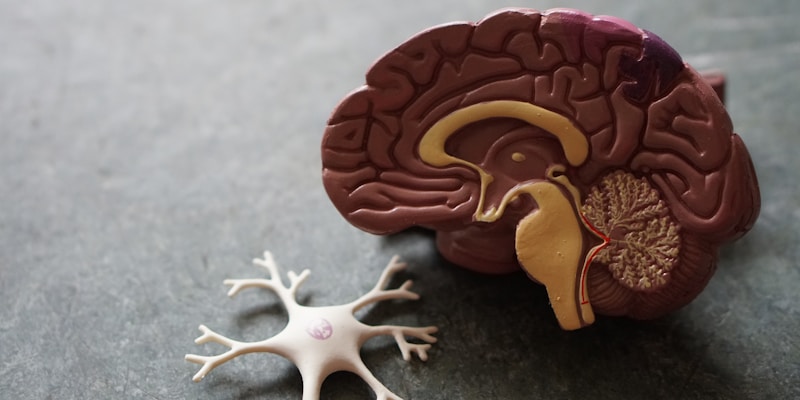
Brain neuroscience

The Apathy-to-Dementia Pathway

Apathy in aging is neurobiologically distinct from depression and is characterized by a profound reduction in goal-directed behavior, motivation, and emotional reactivity. Neuroimaging studies consistently demonstrate that apathy correlates with hypometabolism (reduced glucose utilization) in the anterior cingulate cortex (ACC) and orbitofrontal cortex (OFC) — regions critical for motivational salience, reward-based decision making, and the integration of emotional valence with behavioral output. The ACC, in particular, serves as a hub connecting prefrontal executive networks with limbic structures including the amygdala and hippocampus. When ACC activity is chronically suppressed, downstream dopaminergic signaling from the ventral tegmental area (VTA) is attenuated, reducing the motivational drive that is essential for cognitive engagement and memory consolidation.

The longitudinal association between apathy and dementia risk appears to be mediated by multiple convergent pathways. First, reduced cognitive engagement accelerates the loss of cognitive reserve — the brain's functional redundancy that allows it to compensate for early neurodegenerative changes. Second, apathy is associated with elevated inflammatory markers including IL-6 and TNF-α, which directly promote amyloid-beta aggregation and tau phosphorylation — the hallmark pathologies of Alzheimer's disease. Third, apathetic individuals show significantly higher rates of physical inactivity, poor sleep hygiene, and social withdrawal, each of which independently increases Alzheimer's risk. The 2020 Donovan et al. study in JAMA Psychiatry, drawing on data from the Harvard Aging Brain Study, demonstrated that elevated apathy scores at baseline predicted a doubling of dementia incidence over a 10-year follow-up, even after controlling for depression, baseline cognitive performance, and cardiovascular risk factors.

Critically, purpose — the psychological antidote to apathy — engages the same prefrontal-limbic circuits through a different mechanism. McAdams's construct of "narrative identity" and Steger's measure of "presence of meaning" both show robust negative correlations with amyloid burden on PET imaging, suggesting that meaning-making may exert direct neuroprotective effects beyond behavioral mechanisms. Relationship quality operates through the HPA axis: warm social bonds suppress cortisol reactivity and reduce allostatic load, decreasing glucocorticoid-mediated hippocampal volume loss — one of the earliest structural changes in Alzheimer's pathology. The intersection of psychological resilience and neurobiology is no longer speculative; it is among the most active and productive frontiers in cognitive aging research.

1
Purpose diminishes — a role ends (career, caregiving), social connections shrink, or life loses its forward direction. The brain's motivational circuits go under-stimulated.
2
Apathy sets in — not sadness, but a flat absence of motivation and emotional engagement. The prefrontal cortex (the brain's "CEO") reduces its activity. Cognitive engagement drops sharply.
3
Cognitive reserve erodes — without mental challenge and social stimulation, the brain's built-in redundancy thins. Think of it as a savings account being slowly drained with no deposits coming in.
4
Inflammation rises — isolation and apathy both drive up inflammatory chemicals in the bloodstream. These chemicals cross into the brain and accelerate the protein buildup (amyloid and tau) associated with Alzheimer's disease.
5
Dementia risk doubles — research shows that individuals with persistent apathy in midlife and early old age have twice the 10-year risk of dementia compared to those with sustained purpose and engagement. The good news: this pathway can be interrupted at any stage.

Every one of the five psychological protectors in this module interrupts this cascade at a different point. That's why they work together — and why starting now matters, regardless of your age.

Quick Check

Test Your Understanding

Three questions. No pressure — this is just to help the ideas stick. You've got this.

According to research on psychological aging, people who develop apathy face what increased risk?

They are 50% more likely to develop depression within five years
They are twice as likely to develop dementia over the next decade
They are three times more likely to experience a stroke

Well done!

You now understand the psychological science of aging better than most people — including most patients. The next step is turning this knowledge into daily habits. Let's build your action plan.

Take Action

Your Five Moves, Starting Now

Each card below maps directly to one of the five psychological protectors. Tap each one you're committing to — even one is a real start.

Replace a lost role with purpose. Sign up for one volunteering or mentoring opportunity this month — not to "stay busy," but to matter to someone.
Audit your social life. Write down 3 people whose company genuinely nourishes you. Schedule time with at least one of them this week — not a group event, a real one-on-one.
Build flexibility with 10 minutes of reflective journaling. Write about one thing in your life that changed unexpectedly — and one way you've adapted. Do this three times this week.
Write your redemptive story. Pick one difficult chapter of your life and write a paragraph about what it ultimately gave you — insight, strength, clarity. This isn't denial; it's integration.
Choose one genuinely new complex skill to learn this year — a language, an instrument, a craft, a sport. It must feel hard and slightly uncomfortable. That discomfort is neuroplasticity happening.
Talk to your doctor. Share what you learned here. Ask whether any signs of apathy, isolation, or rigidity should be part of your regular health check-ins going forward.

These strategies are evidence-informed lifestyle interventions for healthy aging and are not a substitute for clinical evaluation or treatment. If you're experiencing significant apathy, persistent low mood, or noticeable memory changes, please speak with your physician promptly — these can have treatable medical causes.

Your Next Step

Your Mind Is Worth Protecting — All of It

You've just learned the psychological side of aging that most conversations about brain health miss entirely. The science is clear: purpose, connection, flexibility, story, and curiosity are not soft lifestyle add-ons. They are robust, measurable protectors of your cognitive future. The engine matters — but so does having somewhere meaningful to go.

1

Start with one action this week

Go back to the Action Cards and pick the one that resonates most. Schedule it into your calendar today — a specific time, a specific person, a specific commitment.

2

Talk to someone you trust about this

Share what surprised you most from this module with a friend, family member, or your doctor. Talking about psychological health out loud makes it real — and starts the kind of meaningful conversation that is itself protective.

3

Bring your questions to your next appointment

Ask your doctor whether psychological resilience factors — purpose, social health, adaptability — should be part of your regular wellness assessment. The best physicians want to know about the whole person, not just the numbers.

Your Doctor

Your Care Team

Did you finish the module?

Let your doctor know you've completed this and send them any questions you have about your specific situation.

This module is health education — not a personal medical diagnosis. Always work with your physician before changing medications or supplements, and seek prompt evaluation for any significant or new cognitive symptoms.

References

Scientific Sources

All claims in this module are supported by peer-reviewed research or landmark longitudinal studies.


Donovan NJ, Hsu DC, Dagley AS, et al. Depressive Symptoms and Biomarkers of Alzheimer's Disease in Cognitively Normal Older Adults. Journal of Alzheimer's Disease. 2015;46(1):63–73. doi:10.3233/JAD-150065
Donovan NJ, Amariglio RE, Zoller AS, et al. Subjective Cognitive Concerns and Neuropsychiatric Predictors of Progression to the Early Clinical Stages of Alzheimer's Disease. American Journal of Geriatric Psychiatry. 2014;22(12):1642–1651. doi:10.1016/j.jagp.2014.02.007
Waldinger RJ, Schulz MS. What's love got to do with it? Social functioning, perceived health, and daily happiness in married octogenarians. Psychology and Aging. 2010;25(2):422–431. doi:10.1037/a0019087
Boyle PA, Barnes LL, Buchman AS, Bennett DA. Purpose in Life Is Associated with Mortality Among Community-Dwelling Older Persons. Psychosomatic Medicine. 2009;71(5):574–579. doi:10.1097/PSY.0b013e3181a5a7c0
Gow AJ, Pattie A, Whiteman MC, Whalley LJ, Deary IJ. Social Support and Successful Aging: Investigating the Relationships Between Lifetime Cognitive Change and Life Satisfaction. Journal of Individual Differences. 2007;28(3):103–115. doi:10.1027/1614-0001.28.3.103
McAdams DP, Bauer JJ, Sakaeda AR, et al. Continuity and Change in the Life Story: A Longitudinal Study of Autobiographical Memories in Emerging Adulthood. Journal of Personality. 2006;74(5):1371–1400. doi:10.1111/j.1467-6494.2006.00412.x
Lövdén M, Bäckman L, Lindenberger U, Schaefer S, Schmiedek F. A Theoretical Framework for the Study of Adult Cognitive Plasticity. Psychological Bulletin. 2010;136(4):659–676. doi:10.1037/a0020080
Husain M. Our Brains, Our Selves. As cited in Newsweek, 2026. [Lay press summary of converging neuroscience evidence on psychological factors in cognitive aging.]

This module is health education — not a personal medical diagnosis. Always work with your physician before making significant changes to your health regimen, especially if you are managing a diagnosed medical condition.

Powered by The AI Doc