How to build the stamina and recovery speed to keep up with family — without being sidelined for three days afterward
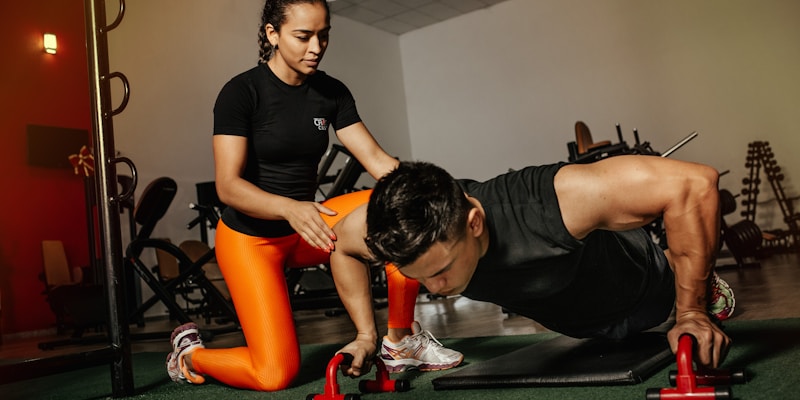
Your doctor shared this because you mentioned feeling wiped out after active days with family or travel, and there's a clear, trainable path to fix that.
Cmd + (Mac) or Ctrl + (Windows) to enlarge this text. On mobile, carefully pinch-to-zoom.You played with your grandkids for an afternoon — or took a long travel day — and your body sent you an invoice you're still paying three days later. That's not just "getting older." That's a trainable problem with a trainable solution.
Functional stamina — the energy to actually live your life, not just survive it — responds powerfully to the right kind of movement, protein, and sleep. Your doctor shared this because you have more capacity than you're currently using.
Aging changes your body's engine — but these numbers also reveal exactly how much room there is to improve.
Sources: American Heart Association Physical Activity Guidelines; Harridge & Lazarus, Physiology 2017; Moore et al., J Physiol 2015.
Tap each card to flip it and unlock the plain-English explanation behind the science.
↑ Tap any card to flip it
Stamina isn't something you have or don't have. It's a variable that shifts based on how consistently you train. Drag the slider to see what changes at each level.
Toggle between the two realities. One is where you are now. One is where this program takes you.
Here's the chain of events that happens inside your body when you train consistently — and why it's never too late to start.
Zone 2 training — sustained aerobic exercise at 60–70% of maximal heart rate — operates primarily through the oxidative phosphorylation pathway in slow-twitch (Type I) skeletal muscle fibers. The primary molecular signal is an increase in the AMP:ATP ratio during prolonged submaximal work, which activates AMP-activated protein kinase (AMPK). AMPK phosphorylation triggers downstream upregulation of PGC-1α (peroxisome proliferator-activated receptor gamma coactivator 1-alpha), the master transcriptional regulator of mitochondrial biogenesis. This leads to increased expression of nuclear respiratory factors (NRF1, NRF2) and mitochondrial transcription factor A (TFAM), ultimately increasing mitochondrial DNA copy number and oxidative enzyme density within muscle fibers.
In older adults, this pathway remains intact but is blunted by age-related declines in mitochondrial quality control (mitophagy), increased mitochondrial reactive oxygen species (ROS) production, and reduced satellite cell responsiveness. The anabolic resistance phenomenon in aged muscle reflects a downregulation of the mTORC1 signaling pathway's sensitivity to leucine — the primary amino acid trigger for muscle protein synthesis (MPS). Where a 25-year-old may achieve maximal MPS stimulation with 20g of high-quality protein post-exercise, adults over 65 typically require 35–40g, with specific emphasis on leucine content exceeding 2.5–3g per serving to overcome the blunted mTORC1 activation threshold.
Hip flexor tightness — a near-universal consequence of prolonged sitting — creates anterior pelvic tilt and reduced stride length, which mechanically increases the metabolic cost of gait and reduces functional reach. The Turkish Get-Up is particularly valuable as a rehabilitation tool because it sequentially loads the hip abductors, thoracic rotators, and shoulder stabilizers through a controlled full-range movement pattern, re-establishing neuromuscular coordination that is otherwise lost in sedentary aging populations. Research from the NSCA demonstrates that multi-joint, ground-based functional exercises produce superior transfer to activities of daily living compared to isolated machine-based resistance training in adults over 60.
This adaptation begins within 2–4 weeks of consistent Zone 2 training — and research shows it occurs at every age, including well into your 70s and 80s.
Three questions. No pressure — every answer teaches you something.
1. What type of exercise is most effective for expanding your stamina "gas tank" — the kind that reduces multi-day recovery after an active family day?
2. You spent all day Saturday at the park with your grandchildren — running, carrying, getting on and off the ground. Why is it critical to eat a high-protein meal or snack that evening?
3. What is a "farmer's carry," and what makes it uniquely useful for grandparents and frequent travelers?
You now understand the three pillars of the Grandkid Battery — aerobic base, protein recovery, and functional strength. That knowledge is the starting point for actually changing how your body performs. The next slide turns it into action.
Tap each card to check it off. These aren't general wellness tips — each one directly trains the system that makes family days sustainable.
These recommendations are general health education and are not a substitute for personalized medical advice. Before beginning any new exercise program, check with your doctor — especially if you have cardiovascular disease, orthopedic conditions, or haven't been active in more than a year. Start slowly and progress gradually.
The goal isn't to run a marathon. It's to be fully present for the people who matter most — without paying a three-day physical tax every time. Your body can absolutely do this. Here's how to start the transformation this week.
Pick 4 days this week and walk briskly for 30 minutes each. Keep it conversational. Put it in your calendar like a doctor's appointment — because it is one.
After your next family day or travel day, eat 30–40g of protein before bed and protect 8 hours of sleep. Notice the difference in how you feel the next morning. That's the signal your body can change.
Your doctor wants to know what's working and what barriers you're hitting. Bring specific questions — "Can I do Zone 2 with my heart condition?" or "Is my protein intake enough?" — and get a personalized plan.
Let your doctor know you've completed this protocol and send them any questions you might have about your specific situation.
This module is health education — not a personal medical diagnosis. Always work with your physician before starting a new exercise program, changing your diet, or making any changes to your care plan.
All claims in this module are supported by peer-reviewed research or established clinical guidelines.
This module is health education — not a personal medical diagnosis. Always work with your physician before changing your exercise program or diet, especially if you are managing chronic disease, taking prescription medications, or recovering from surgery.