Body

The Muscles You Lose First (And How To Save Them)

A guide to age-related fast-twitch fiber loss and posterior chain atrophy — and the specific exercises that stop both
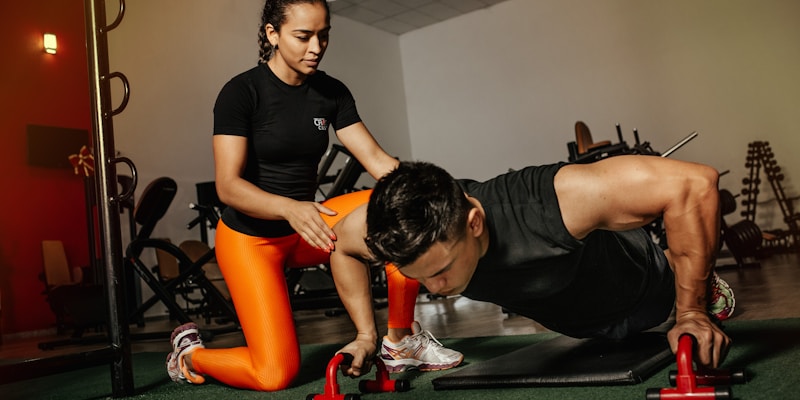
Your doctor shared this because understanding which muscles aging targets first — and why — is the key to staying strong, independent, and on your feet.

What you'll learn:

  • Why aging steals your fast-twitch (Type 2) muscle fibers first, and what that costs you in real life
  • What "gluteal amnesia" is, why decades of sitting causes it, and how it sets off a dangerous chain reaction
  • The specific exercises proven to preserve fast-twitch fibers and rebuild your posterior chain — starting today
Body

Aging Doesn't Steal Your Muscles Equally

Before you begin
Trouble reading? Press Cmd + (Mac) or Ctrl + (Windows) to enlarge this text. On mobile, carefully pinch-to-zoom.
Prefer to listen? Use your device's native "Spoken Content" or "Select to Speak" accessibility settings to have this module read aloud to you while you rest your eyes.

It's a sniper, not a bomb. Aging picks off a very specific type of muscle fiber — the ones you use to catch yourself when you trip, jump out of the way of a car, or get up off the floor fast. By the time most people notice, those fibers are already decades into decline.


This module explains exactly which muscles go first, why modern life accelerates the loss, and what you need to do — not just "stay active," but specifically what — to stop it.

Sarcopenia Fast-Twitch Fibers Posterior Chain Fall Prevention
Why It Matters

The Numbers Are Hard to Ignore

Muscle loss with age isn't a gentle slide. It's a cliff edge — and the fiber type you lose first is the one that keeps you alive.

0
Fast-Twitch Fibers Lost by Age 80
Landmark 1988 autopsy studies by Lexell showed adults lose up to half their Type 2 fibers by their 80s — far more than slow-twitch fibers.
0
Muscle Mass Lost Between 50–80
The average person loses roughly a third of their total muscle mass over these three decades — but fast-twitch loss is disproportionately worse.
0
Of Serious Fall-Related Injuries Occur in Adults 65+
Falls are the leading cause of injury death in older adults. Most result from an inability to react fast enough — a fast-twitch fiber problem.
2× More Effective
Resistance Training vs. Aerobic Exercise for Sarcopenia
A 2010 meta-analysis by Peterson et al. found progressive resistance training produced significantly greater improvements in muscle strength and mass than aerobic exercise alone in older adults — confirming that only heavy loading preserves the fibers aging targets first.

Sources: Lexell J. Acta Physiol Scand. 1988; Peterson MD et al. Am J Med. 2010

Key Concepts

Four Things You Need to Understand

Tap each card to flip it and reveal the plain-English explanation.

Type 2 (Fast-Twitch) Fibers
These are your "emergency" muscle fibers. They fire explosively — in milliseconds — when you need sudden force: catching a trip, sprinting for a bus, jumping back from a curb. They're powerful but tire quickly. And aging destroys them first.
Motor Unit Denervation
Every muscle fiber is controlled by a nerve cell called a motor neuron. With age, the motor neurons controlling fast-twitch fibers die off. Orphaned fibers are then "adopted" by slow-twitch neurons — permanently converting them into slow, weak fibers. Once converted, they can't come back.
The Posterior Chain
This is the chain of muscles running down your back side: glutes, hamstrings, and spinal erectors. Think of them as your anti-gravity engine — they hold you upright, power every step you take, and protect your spine. They atrophy fastest in people who sit for a living.
Gluteal Amnesia
When you sit for hours every day, your brain's motor cortex gradually reduces the nerve signal it sends to your glutes. The glutes don't just weaken — your brain literally forgets how to fire them properly. It's not a muscle problem first; it's a wiring problem. The good news: it's reversible.

↑ Tap any card to flip it

How It Works

The Sitting-to-Falling Cascade

The collapse of your posterior chain follows a predictable sequence. Tap the steps below in the correct biological order to build the pathway.

Tap the steps in the correct order to build the pathway:

Your pathway builds here...

Tap each step in the correct order to build the pathway

Common Myths

Things Most People Get Wrong

These three beliefs feel reasonable — but they're exactly what keeps people from doing what actually works. Tap each card to see the truth.

"I walk every day. That's enough to keep my muscles strong as I age."
Walking is nearly 100% slow-twitch. It does zero to preserve your Type 2 fast-twitch fibers — the exact ones aging destroys. Only heavy resistance training and explosive movements recruit and save them. Walking is great for your heart. It won't save your fast-twitch fibers.
"Lifting heavy weights is dangerous for older adults. Light weights with high reps are safer."
Light weights don't generate enough force to recruit Type 2 fibers at all. Research shows that progressive heavy resistance training — done with proper form — is not only safe for older adults, it's one of the most protective things they can do. The risk of NOT lifting heavy is far greater than the risk of lifting properly.
"My back hurts because I have a 'bad back.' It's a spine problem."
In most cases, chronic lower back pain in sedentary adults is a glute problem. When the glutes shut down from sitting, the lower back muscles take over jobs they weren't designed for — and they get overloaded and inflamed. Rebuilding the posterior chain, starting with daily glute bridges, is often more effective than any back treatment.

↑ Tap each card to reveal the truth

The Science

Why Your Engine Loses Its Turbo

Here's the biological sequence that explains why fast-twitch fibers vanish — and why most "staying active" advice fails to stop it.

The Fast-Twitch Denervation Cascade

Age-related skeletal muscle atrophy (sarcopenia) is characterized by a selective, disproportionate loss of Type 2 (fast-twitch) muscle fibers driven primarily by motor unit remodeling. Alpha-motor neurons innervating Type 2 fibers have higher metabolic demands and larger cell bodies, rendering them more susceptible to age-related apoptosis and mitochondrial dysfunction. As Deschenes (2004) documented, the progressive death of fast-twitch motor neurons results in fiber denervation; surviving slow-twitch (Type 1) motor neurons attempt axonal sprouting to reinnervate orphaned fibers through a process called collateral reinnervation. This converts former Type 2x and 2a fibers into slow, fatigue-resistant Type 1 fibers — a permanent phenotypic shift confirmed by myosin heavy chain isoform analysis.

Lexell's landmark 1988 autopsy study of 43 male subjects aged 15–83 quantified this loss with histological precision: total fiber count declined by ~39% between young and elderly subjects, but Type 2 fiber cross-sectional area fell by up to 26% more than Type 1, with Type 2b fibers showing the most severe atrophy. The posterior chain muscles — gluteus maximus, hamstrings complex, and lumbar erector spinae — are particularly vulnerable because they contain a high proportion of Type 2 fibers AND are chronically silenced by prolonged hip flexion (sitting), which inhibits gluteal activation via reciprocal inhibition of the hip flexors (psoas) overriding gluteal motor drive.

McGill's biomechanical research (2015) established that gluteus maximus, as the largest muscle in the body, is the primary extensor of the hip and the dominant anti-gravity muscle during gait and dynamic balance. When gluteal inhibition occurs — what clinicians call "gluteal amnesia" — the lumbar erector spinae and thoracolumbar fascia assume compensatory roles in hip extension, creating shear forces on the lumbar discs and facet joints that exceed safe loading parameters. Peterson et al.'s 2010 meta-analysis (n=1,079 subjects across 47 trials) confirmed that only progressive resistance training at ≥70% 1-repetition maximum produces statistically significant Type 2 fiber hypertrophy and neural drive restoration in older adults, with effect sizes far exceeding those seen with walking or low-intensity aerobic protocols.

1
With age, the motor neurons controlling Type 2 fast-twitch fibers begin to die off — cutting the "electrical wire" to those fibers
2
Denervated fast-twitch fibers are "adopted" by nearby slow-twitch motor neurons through a process called collateral reinnervation — permanently converting them into slow, weak fibers
3
Simultaneously, sitting for hours daily causes reciprocal inhibition — the hip flexors become dominant and actively suppress the neural signal to the glutes, creating gluteal amnesia
4
Without the explosive force of fast-twitch fibers or the postural support of the posterior chain, the body's reactive balance system fails — you can't catch yourself fast enough when you start to fall
5
The only stimulus that reverses this — recruiting and preserving Type 2 fibers — is high-load resistance training and explosive movements. Low-intensity activity does not generate enough force to trigger fast-twitch recruitment at all

Think of it this way: your turbo boost doesn't degrade from overuse — it rusts from neglect. The only way to keep it online is to actually use it, hard, regularly.

Quick Check

Test Your Understanding

Three questions. They get more interesting as you go. No pressure — this is just for you.

Which muscle fiber type does aging attack first — and why does losing it put you at risk of falling?

Type 1 slow-twitch fibers — they control posture and balance during walking
Type 2 fast-twitch fibers — they generate the explosive force needed to catch yourself mid-stumble
Both fiber types are lost equally — aging is non-selective in how it affects muscle

Well done!

You now understand something most people twice your gym-experience don't: it's not about how much you move — it's about how you move. The right stimulus, applied consistently, is the difference between thriving at 80 and struggling at 65.

Take Action

Six Things You Can Start This Week

Tap each card as you commit to it. These aren't generic tips — they're the specific interventions shown to preserve fast-twitch fibers and rebuild your posterior chain.

Heavy compound lifts twice a week — squats, deadlifts, or leg press. This is the only proven stimulus for Type 2 fiber preservation.
Add explosive movements — fast chair stands, box step-ups, or kettlebell swings — to specifically target fast-twitch recruitment.
Perform glute bridges daily (bodyweight is fine) to reverse gluteal amnesia and rebuild posterior chain activation.
Stand up from your desk every 30 minutes. Even brief interruptions to sitting prevent further glute hibernation.
Hire a qualified trainer for 2–3 sessions to learn proper deadlift and squat form before adding weight — form protects you.
Ask your doctor about a bone density and muscle composition (DEXA) assessment to know exactly where you stand.

Starting a new resistance training program after age 50 is generally safe and highly beneficial, but always consult your physician first — especially if you have osteoporosis, joint replacements, cardiovascular disease, or any condition that affects your spine or hips. A physiotherapist or certified strength coach can adapt these movements for your specific situation.

Your Next Step

You're Closer to Strong Than You Think

The research is unambiguous: it's never too late to rebuild fast-twitch fibers and reawaken your posterior chain. Adults in their 70s and 80s who begin progressive resistance training show measurable fiber hypertrophy within 8–12 weeks. The body is remarkably willing to respond — it just needs the right signal. Your next appointment is the place to make a plan.

1

Start the Glute Bridge Today

Lie on your back, feet flat, knees bent. Drive your hips toward the ceiling by squeezing your glutes hard. Hold 2 seconds at the top. Do 3 sets of 10 every morning. This single move begins rewiring the brain-glute connection immediately.

2

Schedule Two Lifting Sessions This Week

Even if you're new to it — a goblet squat with a light dumbbell, or a leg press at the gym — counts. The goal is to load the legs with enough resistance that the last 2–3 reps are genuinely challenging. That's the threshold that wakes up Type 2 fibers.

3

Bring This Module to Your Next Appointment

Ask your doctor about a DEXA scan for muscle composition, a referral to a physiotherapist or strength coach, and whether any of your current medications (statins, some blood pressure drugs) can affect muscle function or recovery.

Your Doctor

Your Care Team

Did you finish the module?

Let your doctor know you've completed this protocol and send them any questions you might have about your specific situation.

This module is health education — not a personal medical diagnosis. Always consult your physician before beginning a new resistance training program, especially if you have osteoporosis, cardiovascular disease, joint replacements, or take medications that may affect muscle or bone health.

References

Scientific Sources

All claims in this module are supported by peer-reviewed research.


Lexell J, Taylor CC, Sjöström M. What is the cause of the ageing atrophy? Total number, size and proportion of different fiber types studied in whole vastus lateralis muscle from 15- to 83-year-old men. Journal of the Neurological Sciences. 1988;84(2-3):275–294. doi:10.1016/0022-510X(88)90132-3
Deschenes MR. Effects of aging on muscle fibre type and size. Sports Medicine. 2004;34(12):809–824. doi:10.2165/00007256-200434120-00002
Peterson MD, Rhea MR, Sen A, Gordon PM. Resistance exercise for muscular strength in older adults: A meta-analysis. Ageing Research Reviews. 2010;9(3):226–237. doi:10.1016/j.arr.2010.03.004
McGill SM. Low Back Disorders: Evidence-Based Prevention and Rehabilitation. 3rd ed. Human Kinetics; 2015. ISBN: 9781450472272.
Aagaard P, Suetta C, Caserotti P, Magnusson SP, Kjaer M. Role of the nervous system in sarcopenia and muscle atrophy with aging: strength training as a countermeasure. Scandinavian Journal of Medicine & Science in Sports. 2010;20(1):49–64. doi:10.1111/j.1600-0838.2009.01084.x
Goodpaster BH, Park SW, Harris TB, et al. The loss of skeletal muscle strength, mass, and quality in older adults: the Health, Aging and Body Composition Study. The Journals of Gerontology: Series A. 2006;61(10):1059–1064. doi:10.1093/gerona/61.10.1059

This module is health education — not a personal medical diagnosis. Always work with your physician before changing your exercise program, especially if you have existing musculoskeletal, cardiovascular, or metabolic conditions.

Powered by The AI Doc